Standardized Interface
MCP defines a shared interface for AI clients to connect with tools, resources, and prompts without one-off integration glue.
MCP is an open protocol that standardizes how AI systems connect to external tools and data. Instead of rebuilding custom connectors for every model-tool pair, teams expose capabilities through MCP servers and reuse them across compatible clients.
MCP defines a shared interface for AI clients to connect with tools, resources, and prompts without one-off integration glue.
Server-side capability boundaries let teams control what a model can read or execute, instead of exposing unrestricted APIs.
Build once as an MCP server, then reuse across MCP-capable clients and internal agents with less lock-in.
MCPHERE is not just a definition page. It is an ecosystem intelligence layer on top of MCP servers: helping teams discover what exists, validate what is integration-ready, and operate continuously with durable decision signals.
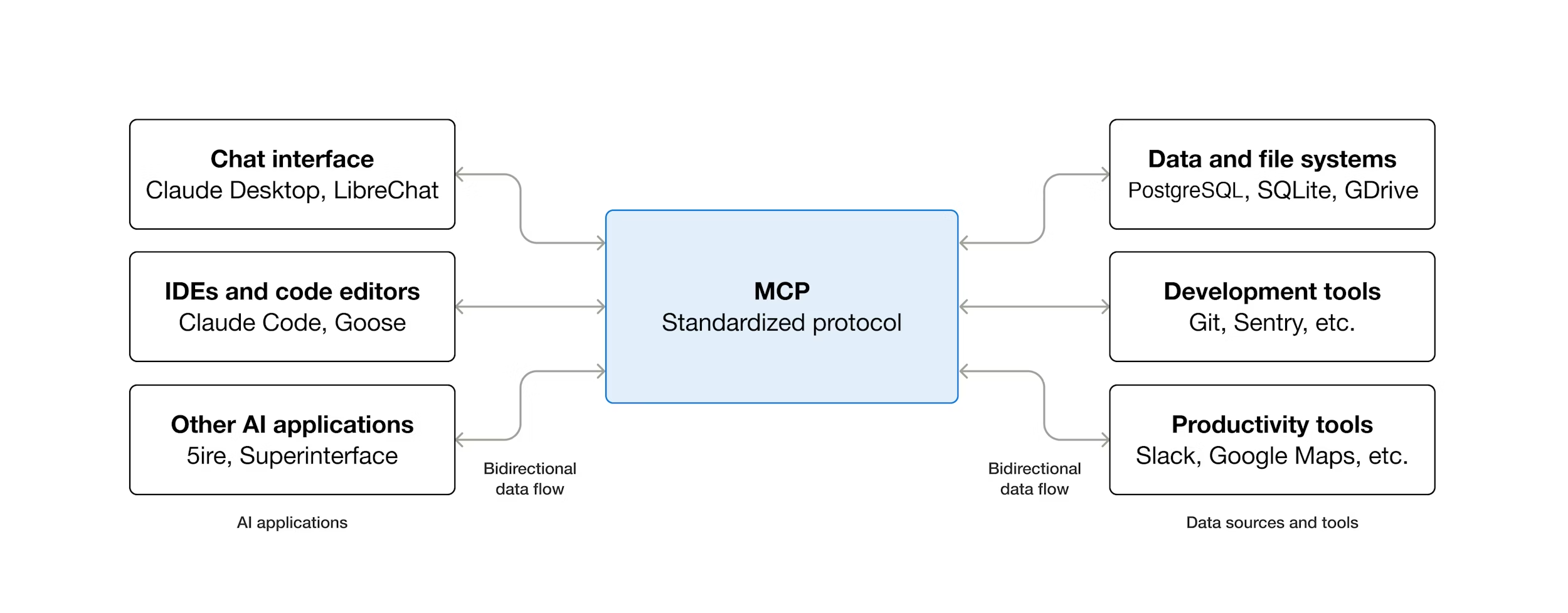
MCP uses a client-server model: an AI application acts as the client, while each MCP server exposes tools, resources, and prompts in a structured, schema-readable way. The result is less custom integration glue, clearer permission boundaries, and more portable agent workflows.
Claude, internal copilots, and agent runtimes can all speak one standard instead of bespoke adapters.
Each server packages a system capability such as GitHub, Slack, databases, files, or internal tools.
Tool definitions and resource schemas make capability discovery and authorization more explicit.
| Dimension | Traditional integration | MCP |
|---|---|---|
| Integration model | Custom code per service | Shared protocol and reusable server interfaces |
| Tool discovery | Docs-first, manual wiring | Schema-described, agent-readable capabilities |
| Access control | App-specific permissions and glue | Clearer server-side boundaries and approval surfaces |
This is why MCP is often described as a “USB-C for AI tools”: one standard, many compatible surfaces, and less reinvention per integration.